
Curating Heritage, Elevating Spaces.
Featured Products
Nubim
Ottchil
Wancho
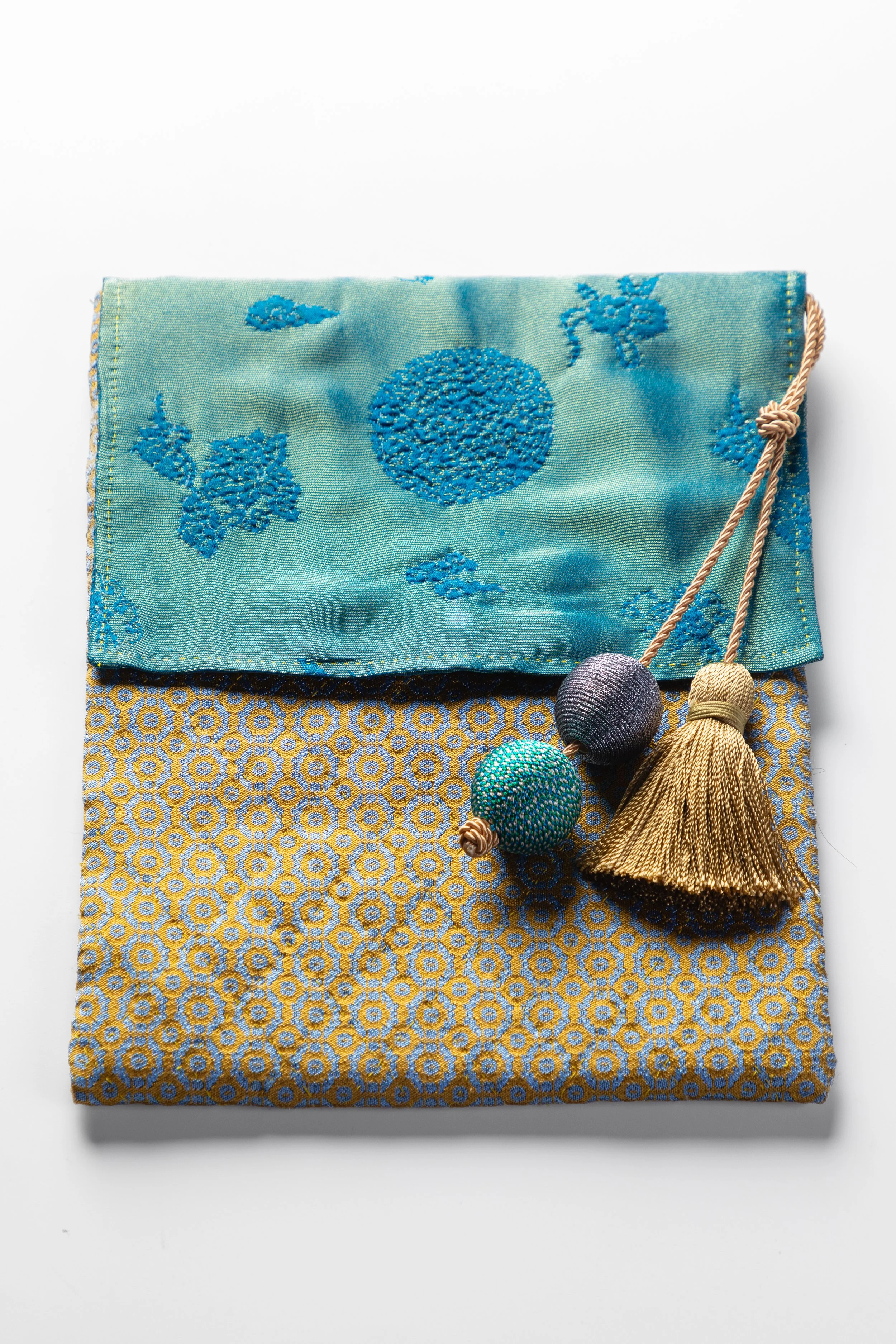
Woven in deep teal silk, the Hae Pouch takes its name from the Korean word for sun — 해 (hae). A bold circular medallion glows at the center of the flap, surrounded by scattered clusters of embroidery, like light breaking across water. Below, a golden geometric pattern continues across the surface, catching warmth and light. A grey, teal, and gold beaded tassel closes the piece with a warm, gathered finish.
Made to hold what matters, the Hae Pouch is hand-quilted stitch by stitch — a traditional Korean technique that builds a natural sense of volume, cushioning your laptop or tablet from everyday impact. Protection comes from craftsmanship, not padding alone.
———————————————————
The Maker
Designed by Apis Cerana. Stitched by Chun Hei Jung, professor emerita of clothing and textile studies at Seoul Women's University, using the traditional Korean technique of nubim (hand-quilting).
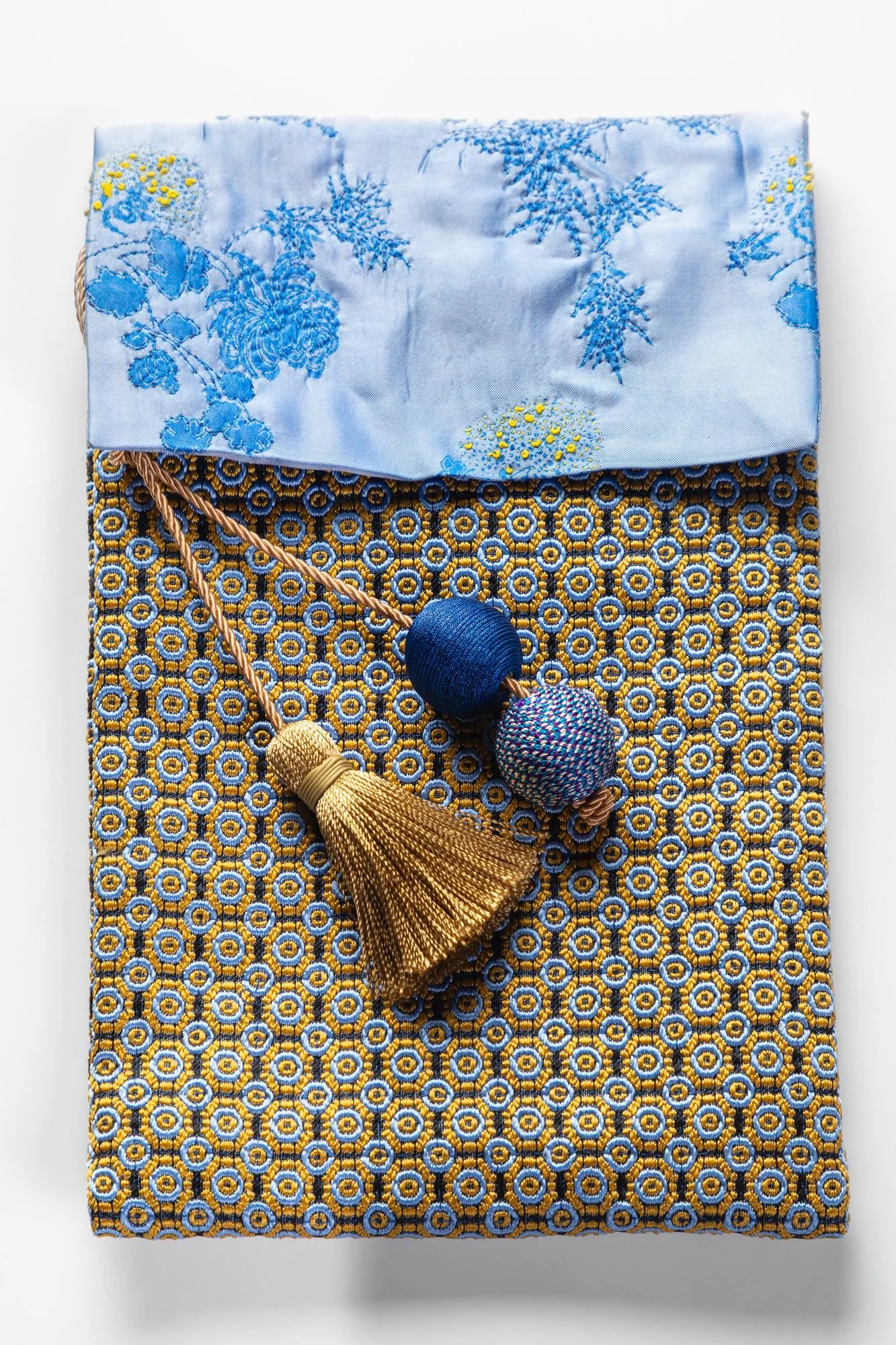
Hand-embroidered in pale sky-blue silk, the Wol Pouch takes its name from the Korean word for moon — 월 (wol). Delicate blossom branches trace across the surface, catching the soft light of early morning, while a golden geometric pattern below echoes gentle ripples on water. A blue beaded knot, paired with a golden tassel, closes the piece with a graceful finish.
Made to hold what matters, the Wol Pouch is hand-quilted stitch by stitch — a traditional Korean technique that builds a natural sense of volume, cushioning your laptop or tablet from everyday impact. Protection comes from craftsmanship, not padding alone.
———————————————————
The Maker
Designed by Apis Cerana. Stitched by Chun Hei Jung, professor emerita of clothing and textile studies at Seoul Women's University, using the traditional Korean technique of nubim (hand-quilting).
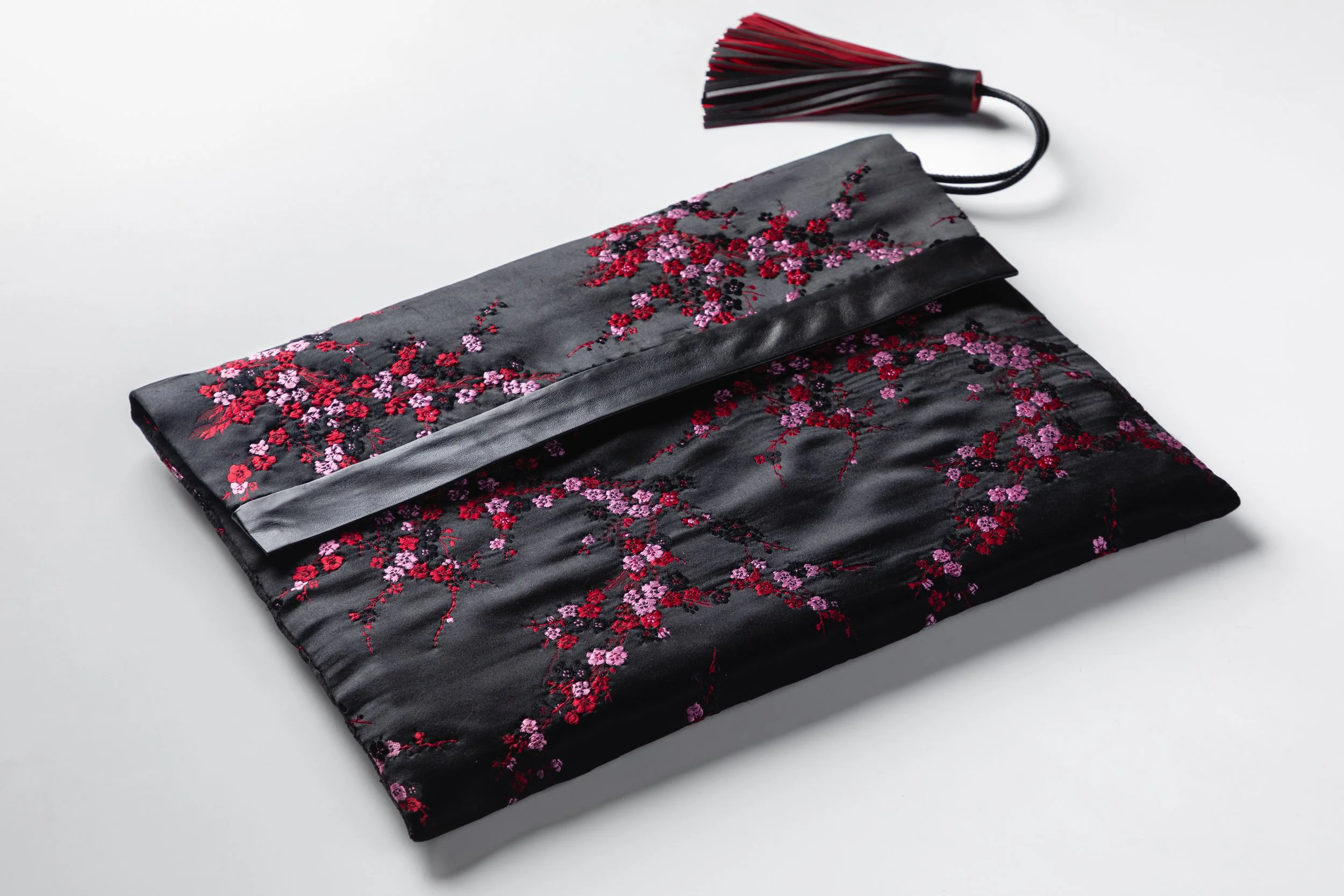
Woven in black silk, the Mae Pouch takes its name from the Korean word for plum blossom — 매화 (mae-hwa). Branches of deep red, magenta, and blush pink blossoms spread across the fabric in full bloom, framed by a black leather edge along the flap. Like the plum blossom itself — one of the first to bloom against winter's cold — the color here breaks boldly through the black, a quiet nod to resilience. A black leather tassel, finished with a thin red edge, closes the piece with a quiet gesture — a modern echo of the traditional norigae.
Made to hold what matters, the Mae Pouch is hand-quilted stitch by stitch, following a traditional Korean technique that builds a natural sense of volume, cushioning your laptop or tablet from everyday impact. Protection comes from craftsmanship, not padding alone.
———————————————————
The Maker
Designed by Apis Cerana. Stitched by Chun Hei Jung, professor emerita of clothing and textile studies at Seoul Women's University, using the traditional Korean technique of nubim (hand-quilting).
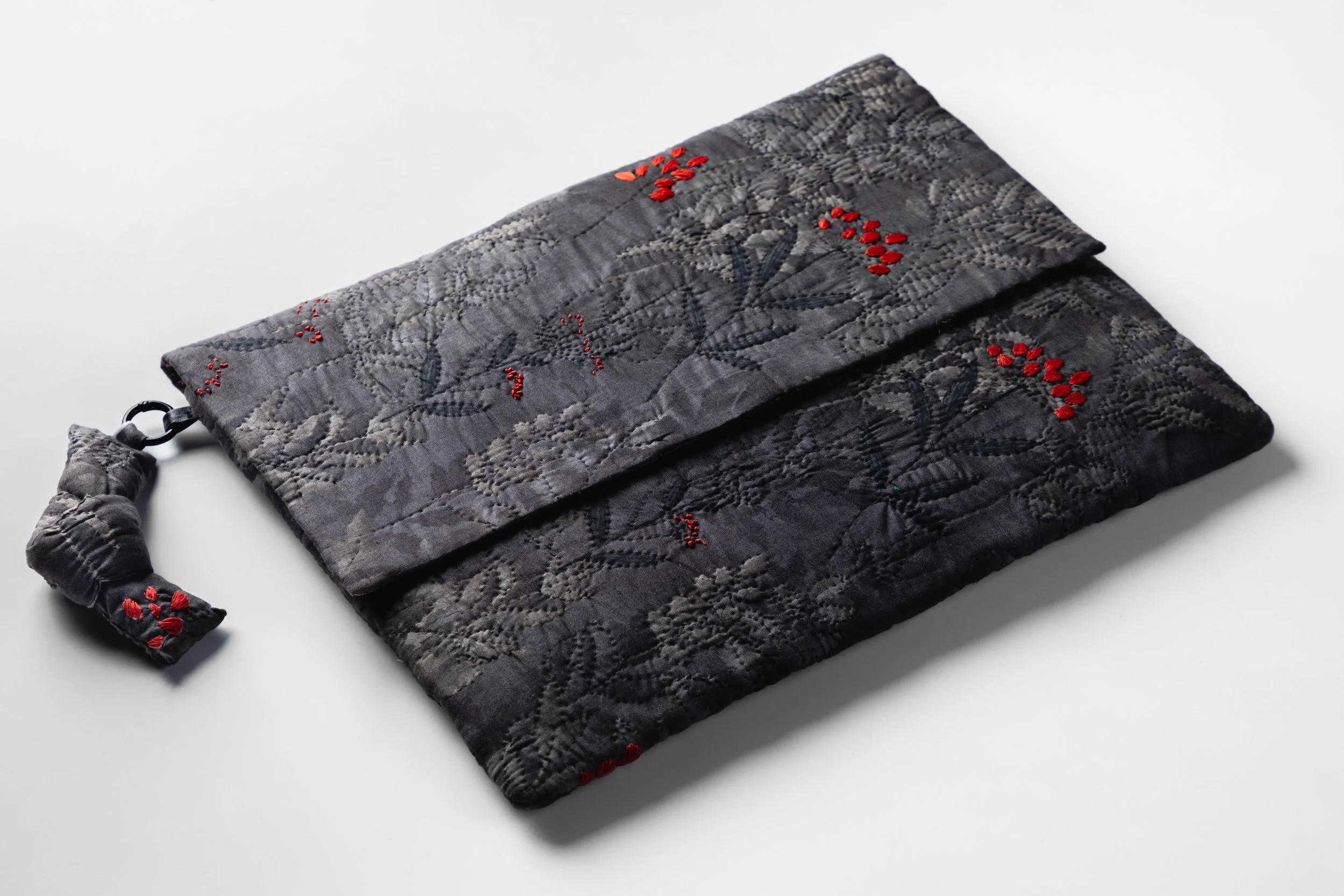
Hand-quilted in muted grey cotton, the Hwa Pouch takes its name from the Korean word for flower — 화 (hwa). Small red blossoms, embroidered by hand in soft knotted stitches, gather quietly across the quilted surface, suggesting flowers rather than depicting their full form. A soft quilted tassel, finished with a touch of red embroidery, closes the piece with a quiet gesture. As in traditional Korean textile work, beauty here is felt rather than announced — restraint carries more meaning than abundance.
Made to hold what matters, the Hwa Pouch is hand-quilted stitch by stitch, following a traditional Korean technique that builds a natural sense of volume, cushioning your laptop or tablet from everyday impact. Protection comes from craftsmanship, not padding alone.
———————————————————
The Maker
Designed by Apis Cerana. Stitched by Chun Hei Jung, professor emerita of clothing and textile studies at Seoul Women's University, using the traditional Korean technique of nubim (hand-quilting).
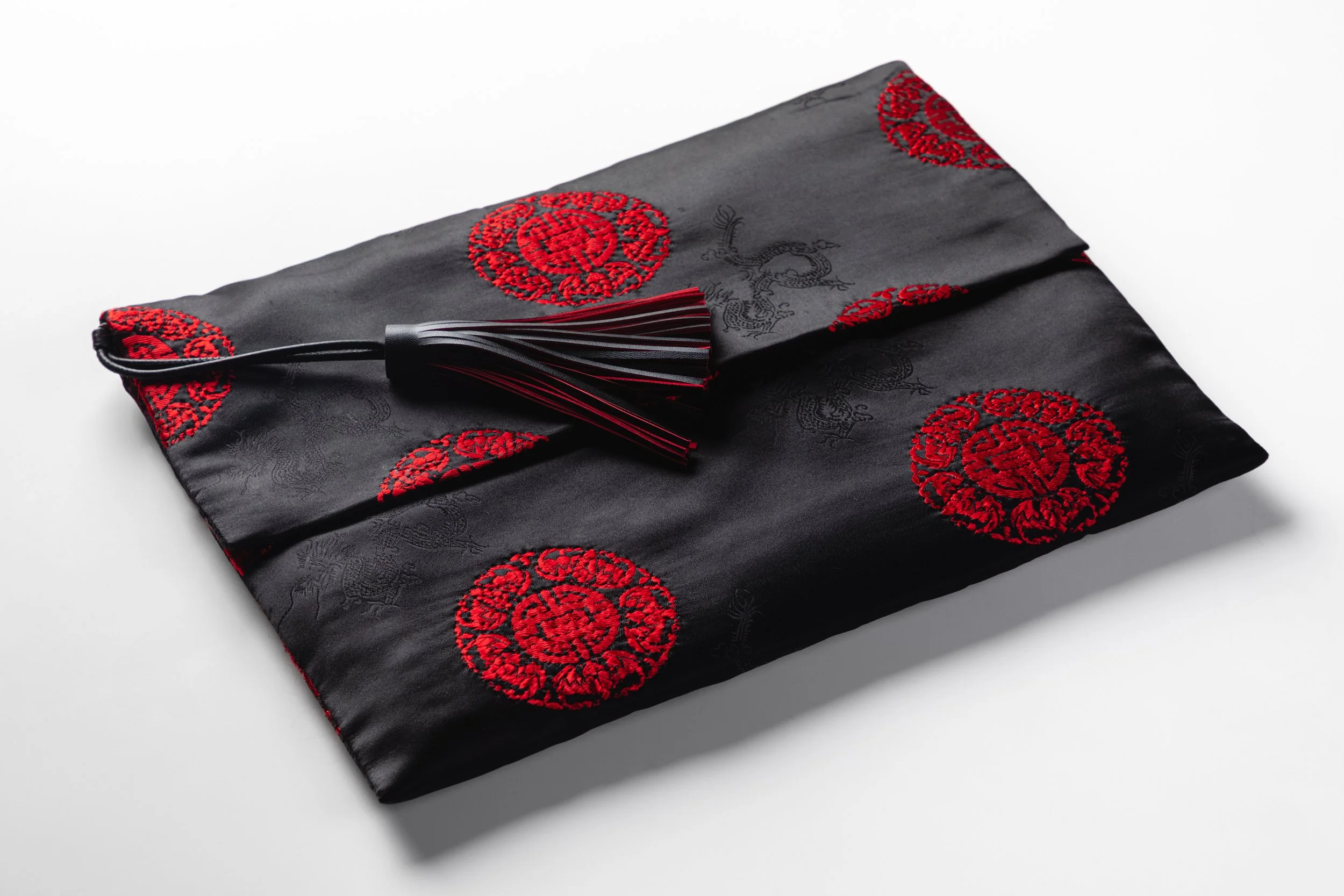
Hand-embroidered in black silk, the Bok Pouch takes its name from the Korean word for fortune — 복 (bok). Circular medallions in deep red thread trace the same auspicious motifs once stitched into traditional Korean textiles, while a faint dragon pattern moves quietly beneath the surface of the fabric. A black leather tassel, finished with a thin red edge, closes the piece with a quiet gesture — a modern echo of the traditional norigae.
Made to hold what matters, the Bok Pouch is hand-quilted stitch by stitch, following a traditional Korean technique that builds a natural sense of volume, cushioning your laptop or tablet from everyday impact. Protection comes from craftsmanship, not padding alone.
———————————————————
The Maker
Designed by Apis Cerana. Stitched by Chun Hei Jung, professor emerita of clothing and textile studies at Seoul Women's University, using the traditional Korean technique of nubim (hand-quilting).
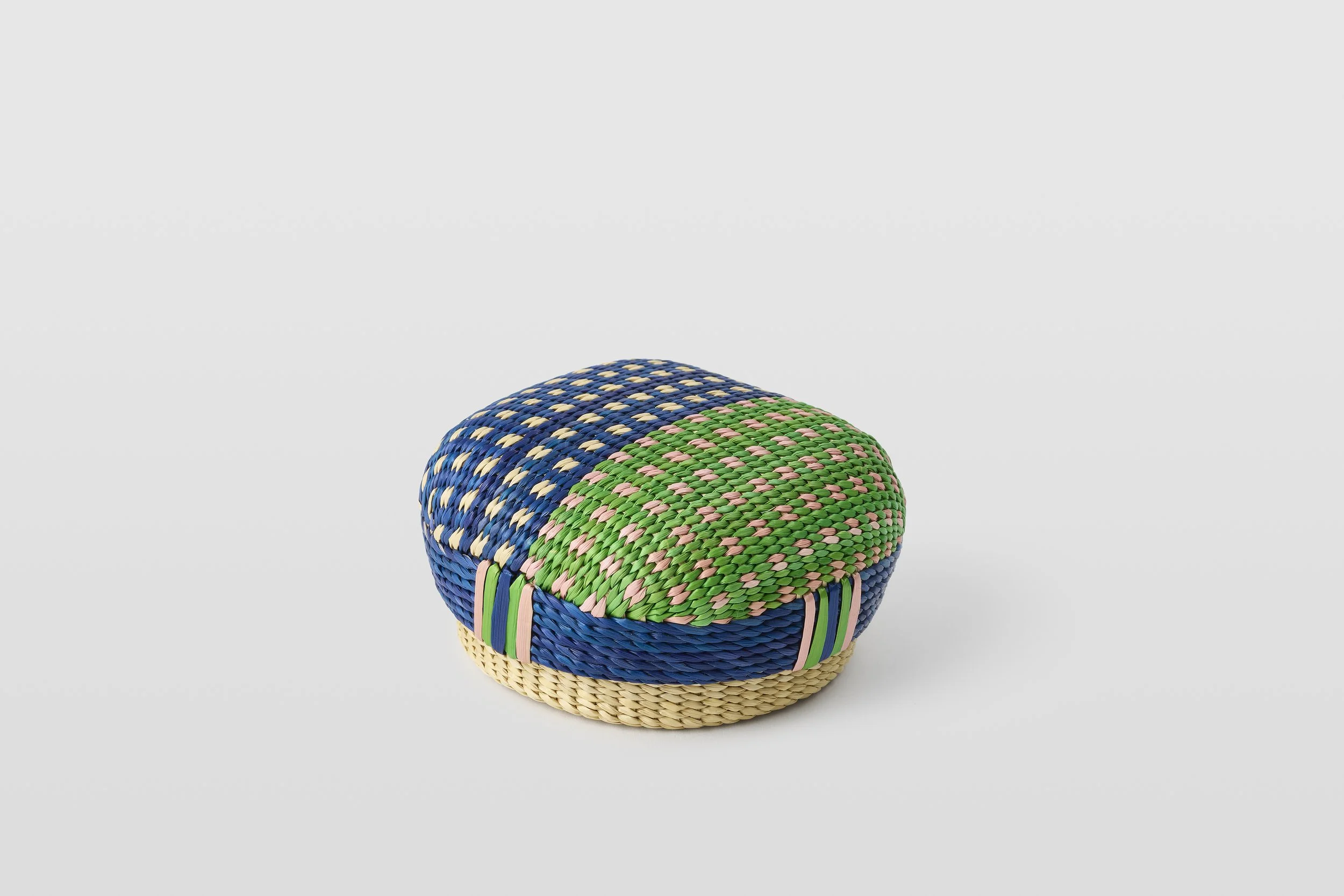
Saekdong (색동) is a traditional Korean pattern of multicolored stripes, best known from the sleeves of a saekdong jeogori worn by children at first birthdays and during holidays. Each stripe holds its own color, sewn edge to edge into one cloth, chosen to welcome good luck at life's happiest moments.
This vessel weaves that spirit into 靑 (cheong), one of Korea's five cardinal colors, meaning blue. Deep indigo and cream form a lattice, soft green and pink thread through in diamonds, and a five-color band — pink, green, indigo, green, pink — circles the base beneath the deep blue above.
Keep a letter inside, a small key, or something you mean to hold onto. Saekdong Cheong keeps it quietly, and keeps it well.
———————————————————
The Maker
Handwoven by Park Sun-deok, certified successor of Wanchojang, Korea's National Intangible Cultural Heritage for traditional wancho (rush) weaving.
For customers in Korea —bank transfer orders are available here - Order Form
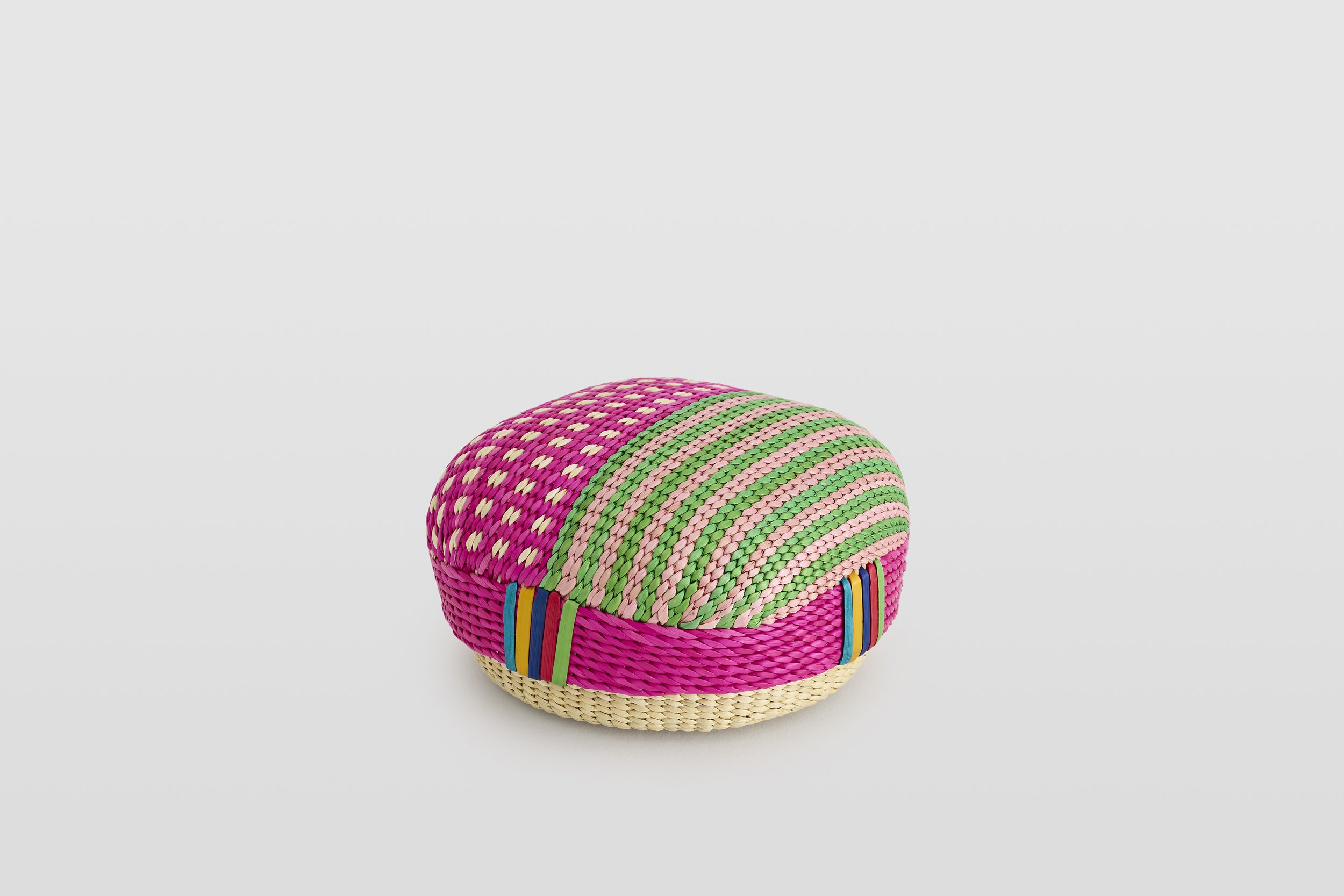
Saekdong (색동) is a traditional Korean pattern of multicolored stripes, best known from the sleeves of a saekdong jeogori worn by children at first birthdays and by families during holidays. Each stripe holds its own color, sewn edge to edge into one cloth, chosen to welcome good luck at life's happiest moments.
This vessel weaves that spirit into 紅 (hong) — a traditional Korean word for red, though here it leans toward magenta rather than true red — capturing the brightest, most vibrant hues of the saekdong spectrum. Magenta, green, and pink cross the surface in bold diagonal bands, while a five-color ring — indigo, red, yellow, green, sky blue — holds that brightness in place.
Keep a ring inside, or a lock of a child's first hair. Saekdong Hong wraps whatever it holds in the same color as celebration.
———————————————————
The Maker
Handwoven by Park Sun-deok, certified successor of Wanchojang, Korea's National Intangible Cultural Heritage for traditional wancho (rush) weaving.
For customers in Korea —bank transfer orders are available here - Order Form
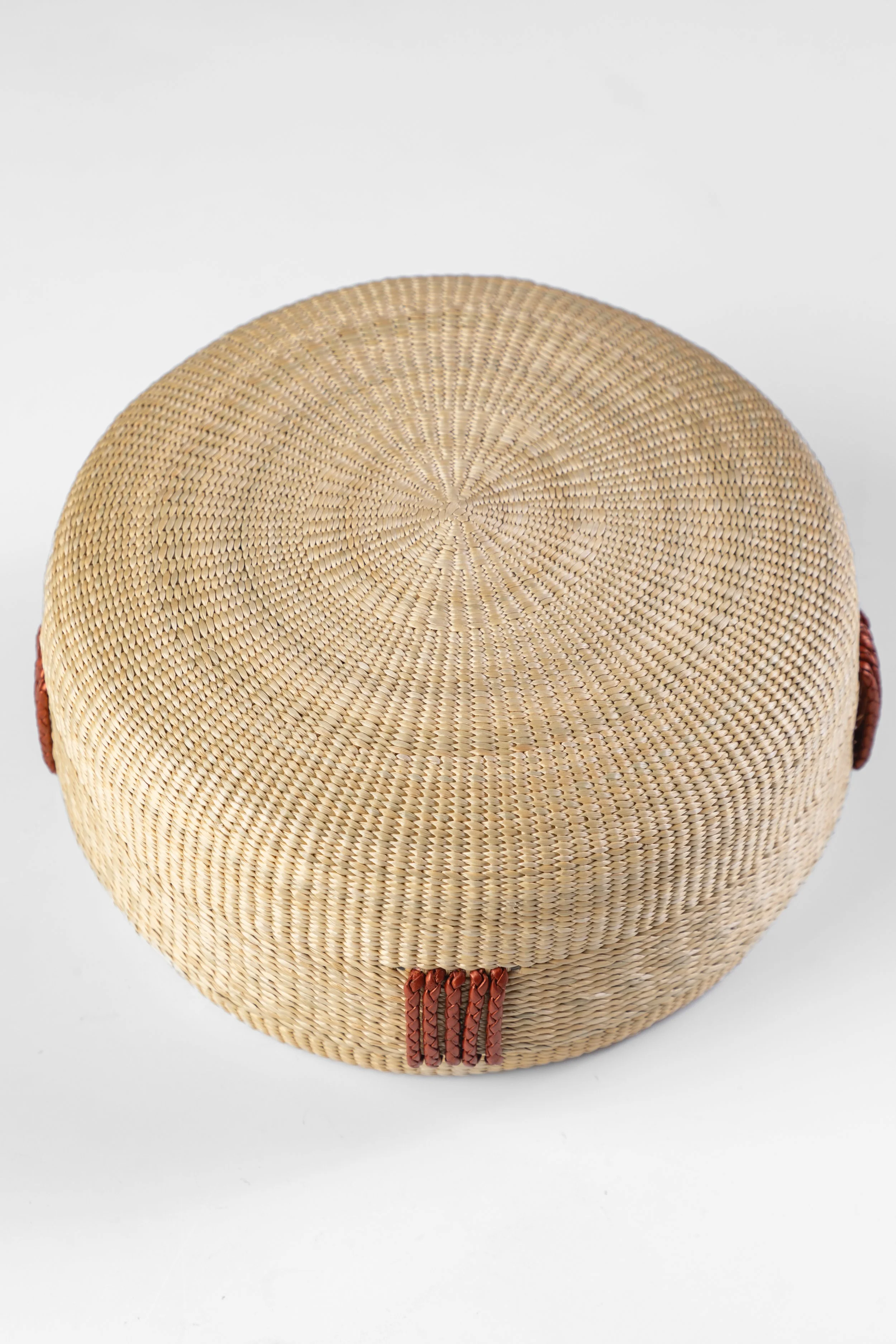
Woven Wedding Vessel
Before a bride entered her new family, she sent word of her sincerity ahead of her. The pyebaek dongguri carried ibaji — food prepared with care by the bride's family, delivered to the groom's household as a gesture of respect and goodwill at the start of this new relationship. What began as a single act of courtesy was often kept afterward as a family's treasured heirloom, passed quietly from one generation to the next.
The weave itself echoes this care — one continuous strand of wanggol reed spiraling outward from a single center, patiently building into wholeness, just as the gift itself was once prepared with care to begin a relationship well.
We reweave this heirloom for the present — not as a vessel for a single occasion, but as a quiet, everyday reminder that the most precious things are always woven by hand, slowly, one thread at a time.
———————————————————
The Maker
Designed by Apis Cerana. Handwoven by Park Sun-deok, certified successor of Wanchojang, Korea's National Intangible Cultural Heritage for traditional wancho (rush) weaving.
Design Registration No. 30-1345462-00-00 (KIPO)
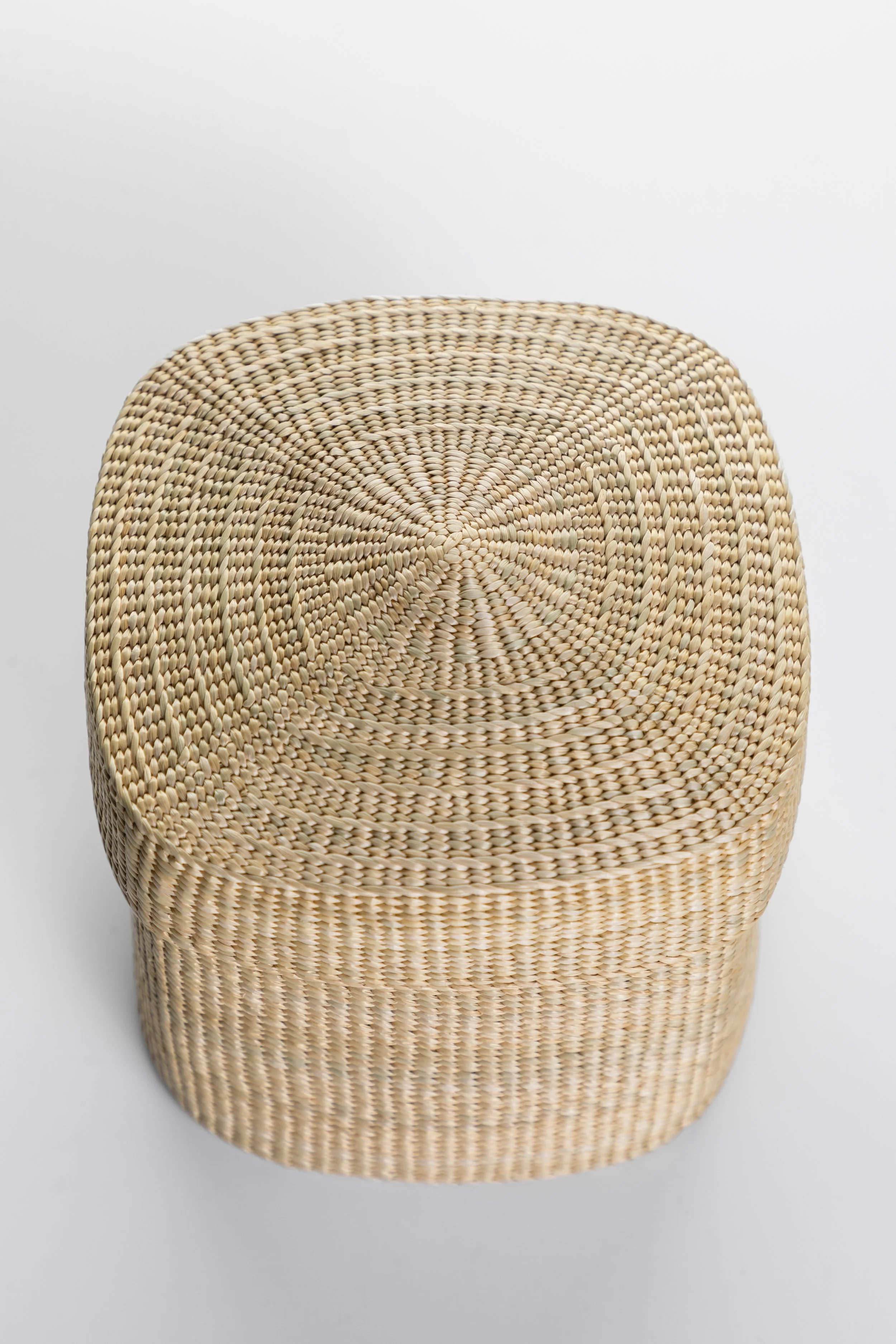
A single strand of wanggol reed spirals from the center of the vessel outward, without ever breaking. The result is a fine, ridged texture you can feel with your hand — like the grain of wood.
The weave holds its shape, but stays open enough to let air through. Whatever it holds — tea, dried herbs, small keepsakes — stays close, never sealed shut.
Gyeol carries the mark of thousands of careful, steady movements, woven by hand. To protect something well doesn't always mean closing it off — sometimes, it simply means letting it breathe.
———————————————————
The Maker
Designed by Apis Cerana. Handwoven by Park Sun-deok, certified successor of Wanchojang, Korea's National Intangible Cultural Heritage for traditional wancho (rush) weaving.
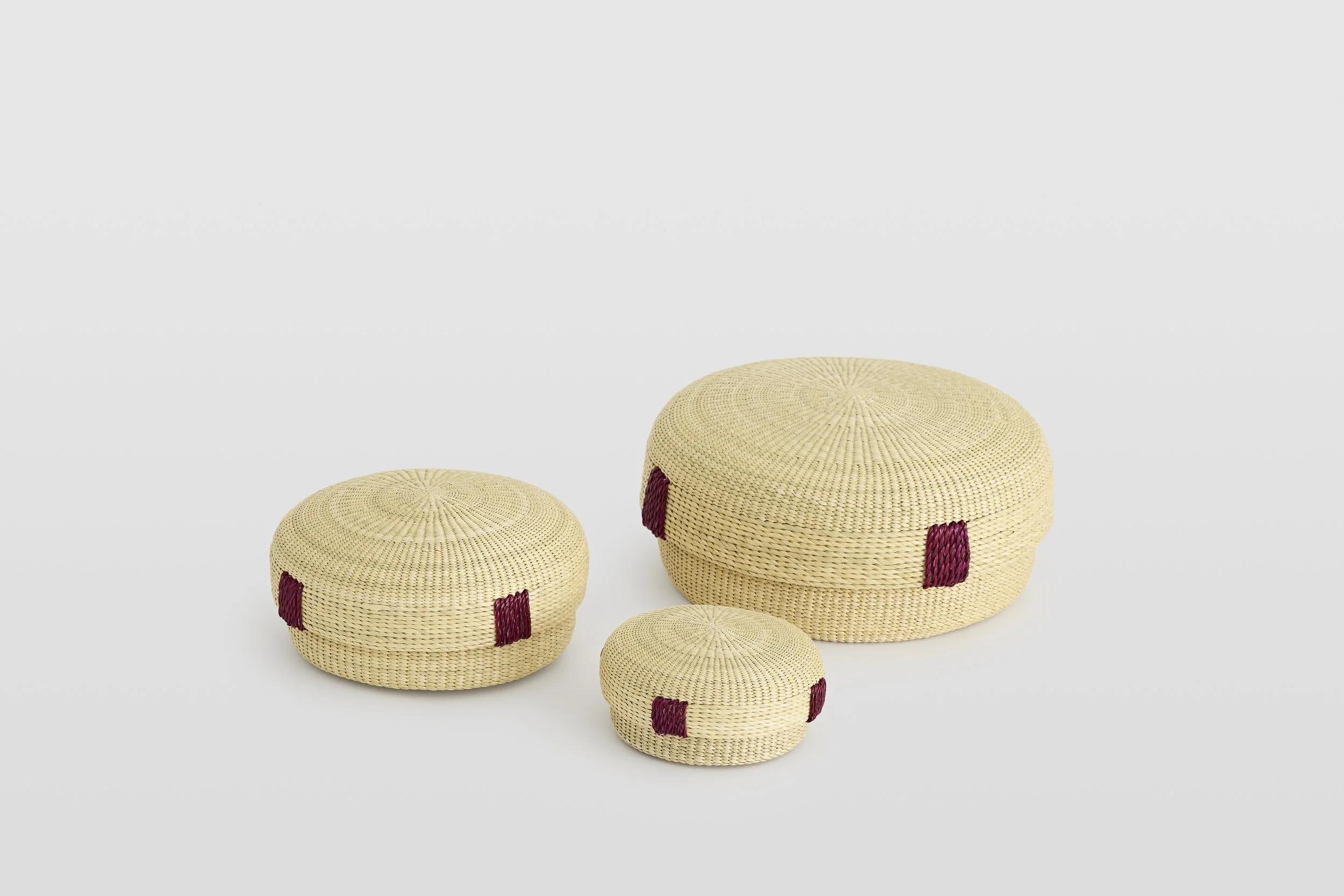
Woven Multipurpose Box Set
A scene completed only when things gather together.
Onggijonggi is a Korean word for things of different sizes gathered closely together — like clay jars in a courtyard, or shoes lined up at a doorway. Different in size, yet together, they feel like one warm, familiar picture.
These three boxes carry that same spirit. Each is woven tightly from cream-colored wanggol, with a small wine-colored accent at the seam.
Each box stands beautifully on its own. But Onggijonggi is completed when they gather. Set them side by side on a shelf, a vanity, or a corner of the dining table — three boxes of different sizes, leaning gently into one another, becoming something warmer together than alone.
——————————————————————
The Maker
Designed by Apis Cerana. Handwoven by Park Sun-deok, certified successor of Wanchojang, Korea's National Intangible Cultural Heritage for traditional wancho (rush) weaving.
Design Registration No. 30-1345462-00-00 (KIPO)
For customers in Korea —bank transfer orders are available here - Order Form
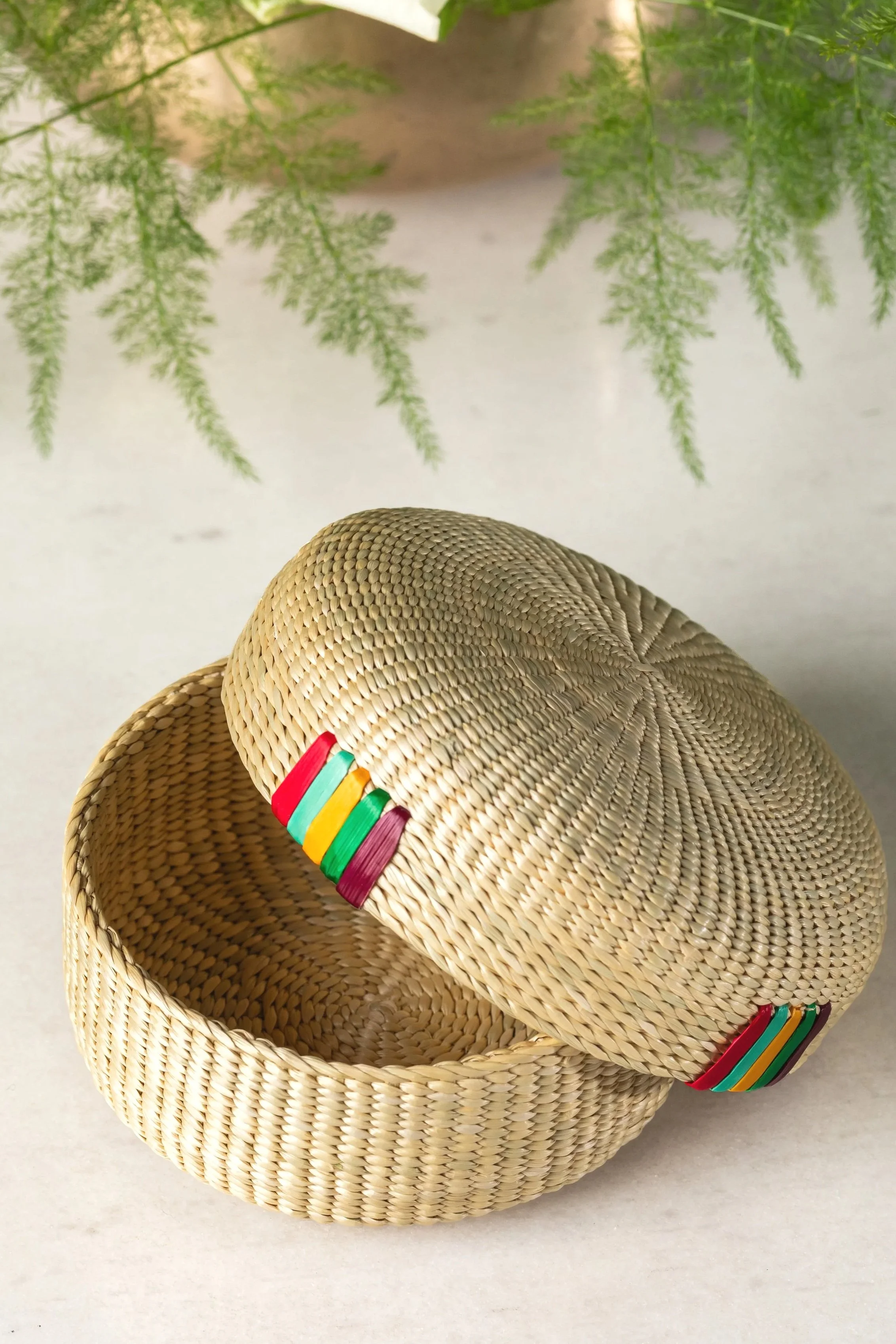
Elevate your space with this handwoven mini basket — a compact reinterpretation of the traditional Korean paebaek basket.
Handwoven from durable Wanggol reeds sourced in Ganghwa, Korea, using the demanding dongguri weaving technique, this miniature objet d'art doubles as a stylish organizer for essential items — equally at home in private residences and premium hospitality settings.
——————————————————
The Maker
Designed by Apis Cerana. Handwoven by Park Sun-deok, certified successor of Wanchojang, Korea's National Intangible Cultural Heritage for traditional wancho (rush) weaving.
Design Registration No. 30-1345462-00-00 (KIPO)
For customers in Korea —bank transfer orders are available here - Order Form
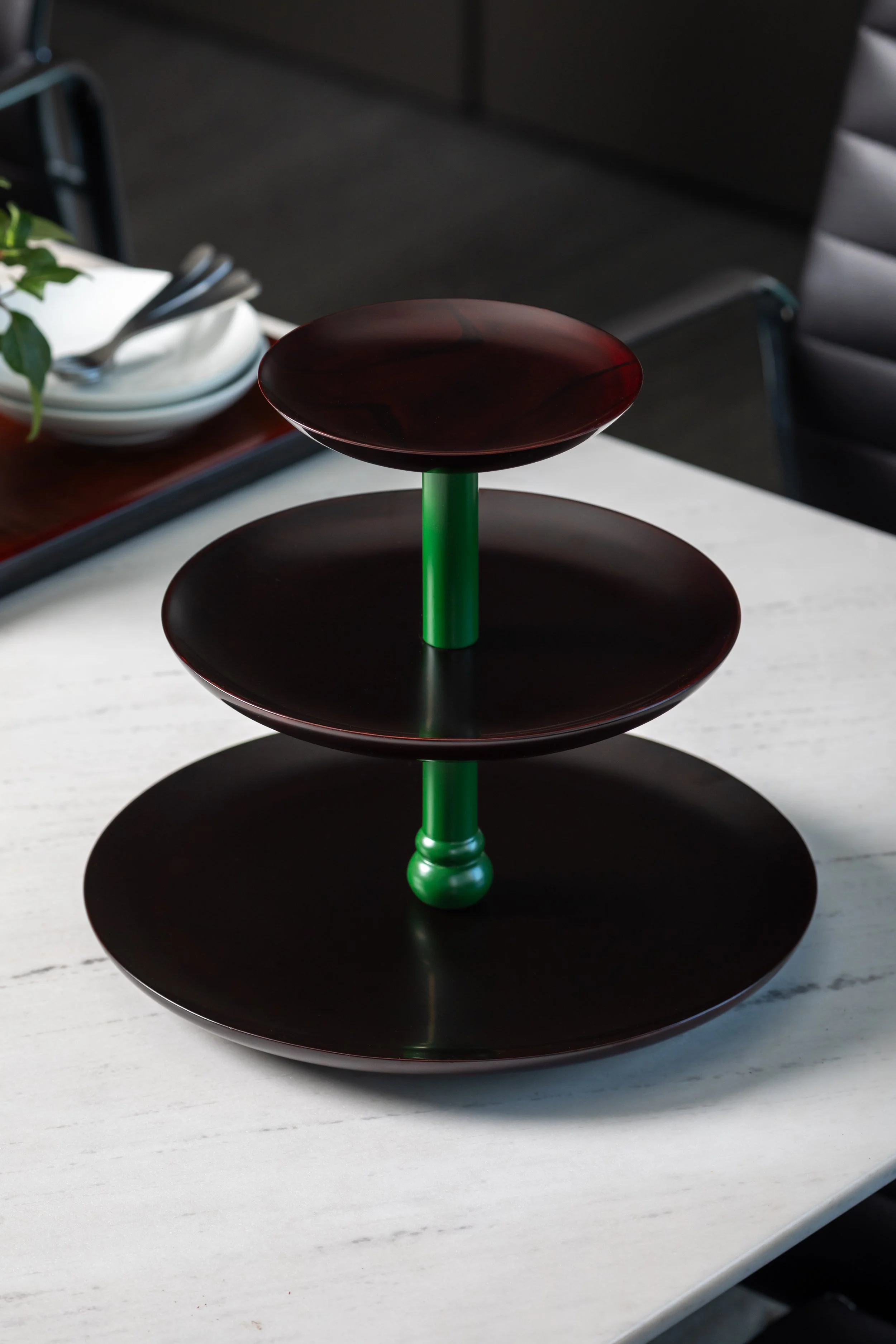
Lacquered Dessert Stand
Where deep lacquer meets a vein of green.
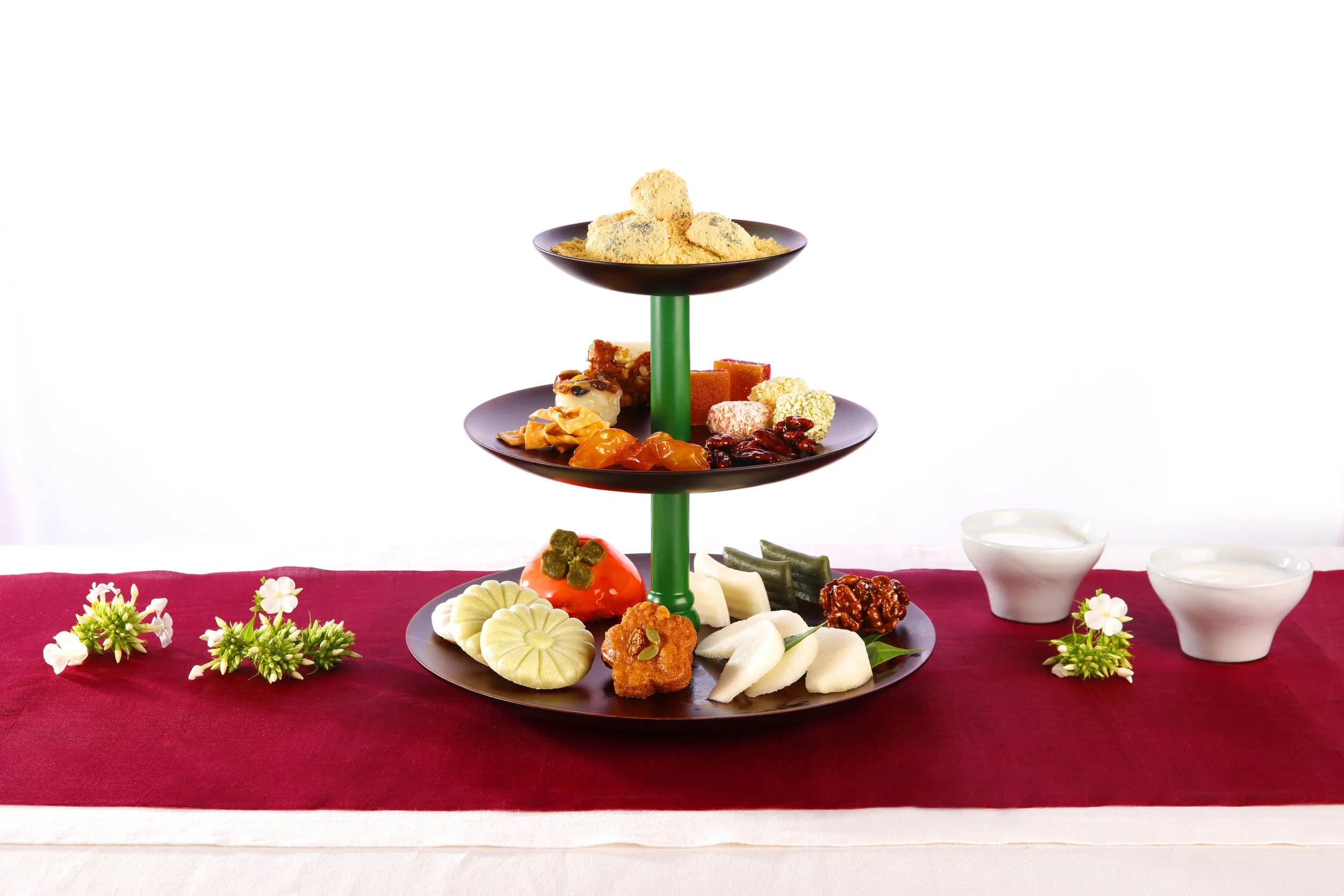
Three dishes, each wider than the one before it, rise from a stem of zelkova lacquered in green— a quiet contrast between the deep, dark brown of traditional lacquer and a single thread of color running through its center.
The stem itself carries two knots — quiet pauses where the rising green gathers itself before continuing upward, each one steadying the tier above it as the form widens toward the base.
The form itself echoes something older than the object: a shape that widens as it descends, like ripples settling outward. At the top, a small offering. At the base, abundance. Between them, the stem holds it all together — steady, unbroken, alive with color against the lacquer's quiet depth.
This is not merely a stand for sweets. It is a small architecture of balance, built by hand, meant to hold a table's most generous moments.
———————————————
The Makers
Designed by Apis Cerana. Lacquered by Park Kang-yong, designated holder of Jeollabuk-do Intangible Cultural Heritage in Refined Lacquer. Turned from solid zelkova by wood master Lee Jong-gwan.
Handcrafted in Korea.
For customers in Korea —bank transfer orders are available here - Order Form
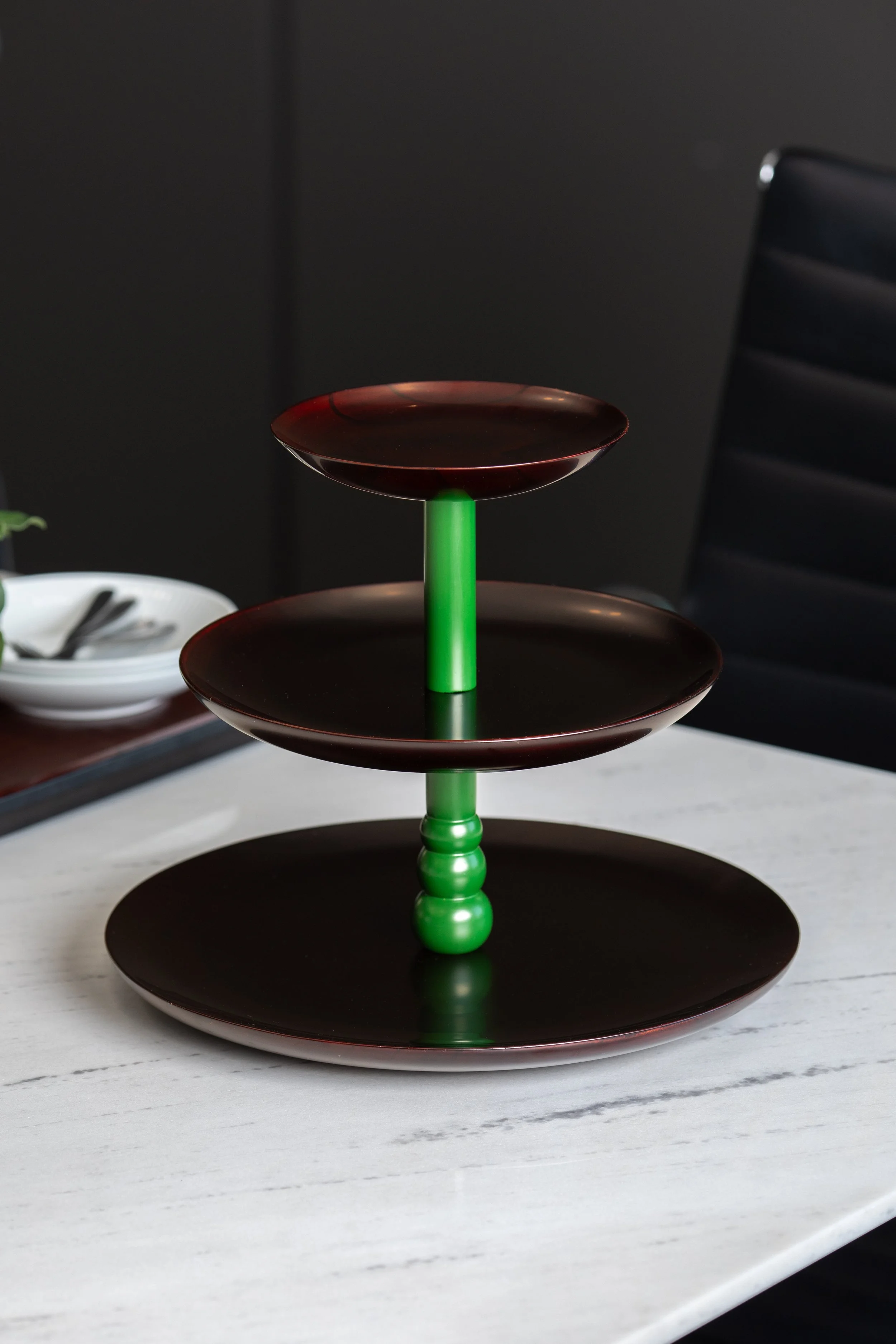
Lacquered Dessert Stand
Where deep lacquer meets a vein of green.
Three dishes, each wider than the one before it, rise from a stem of zelkova lacquered in green — a quiet contrast between the deep, dark brown of traditional lacquer and a single thread of color running through its center.
The stem itself carries triple knots — quiet pauses where the rising green gathers itself before continuing upward, each one steadying the tier above it as the form widens toward the base.
The form itself echoes something older than the object: a shape that widens as it descends, like ripples settling outward. At the top, a small offering. At the base, abundance. Between them, the stem holds it all together — steady, unbroken, alive with color against the lacquer's quiet depth.
This is not merely a stand for sweets. It is a small architecture of balance, built by hand, meant to hold a table's most generous moments.
———————————————
The Makers
Designed by Apis Cerana. Lacquered by Park Kang-yong, designated holder of Jeollabuk-do Intangible Cultural Heritage in Refined Lacquer. Turned from solid zelkova by wood master Lee Jong-gwan.
Handcrafted in Korea.
For customers in Korea —bank transfer orders are available here - Order Form
News and Exhibitions
Collection Launch
Details of upcoming exhibitions and events will be announced in due course.
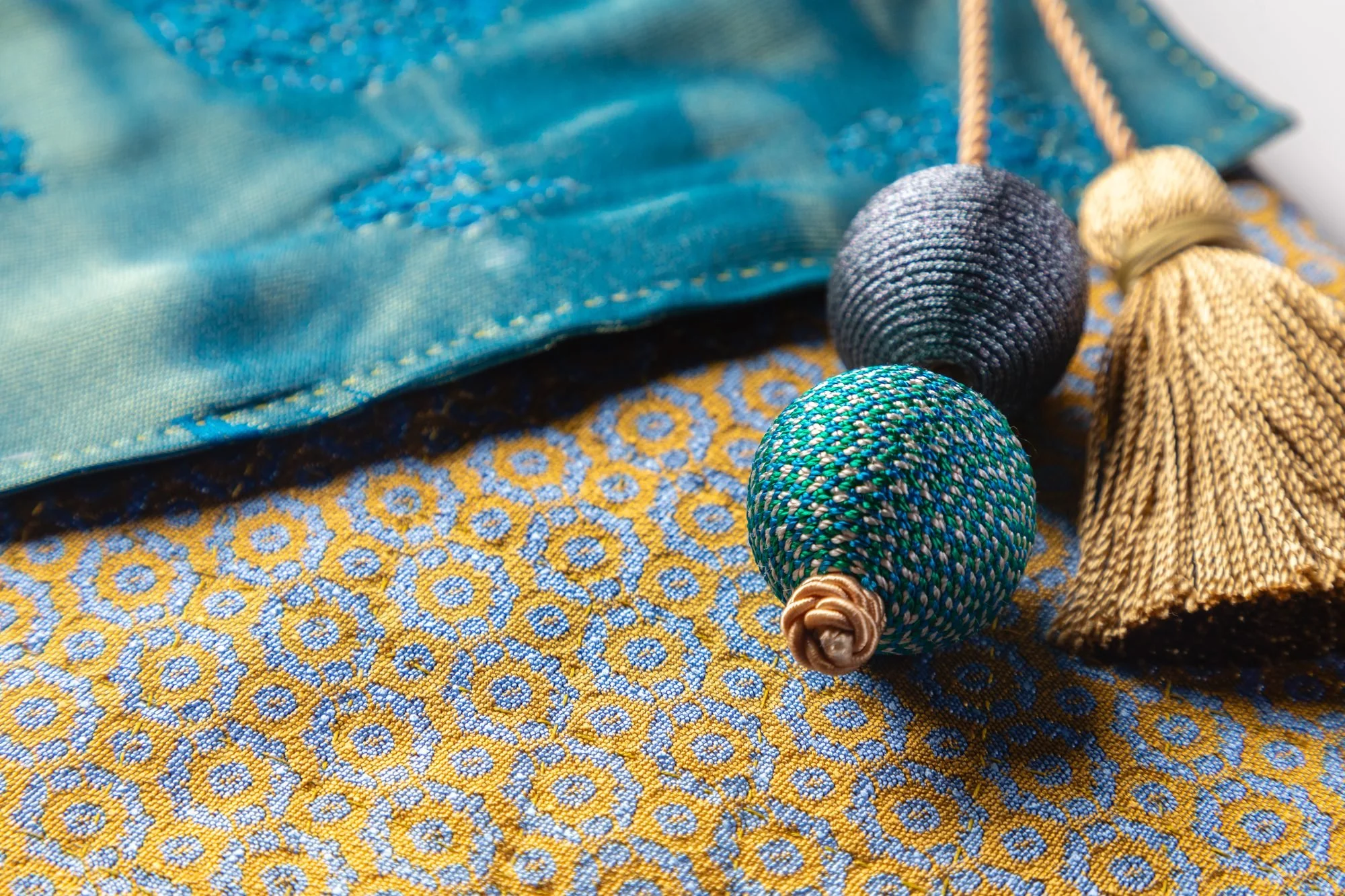
Woven in deep indigo blue and black, the Sal Pouch takes its name from 살 (sal) — the wooden lattice bars found in traditional Korean windows and doors. The interlacing pattern echoes the quiet geometry of a hanok's lattice screen, light and shadow crossing in even rhythm. A glossy blue charm, shaped like folded wings, hangs from a soft loop for a playful finish.
Made to hold what matters, the Sal Pouch is hand-quilted stitch by stitch — a traditional Korean technique that builds a natural sense of volume, cushioning your laptop or tablet from everyday impact. Protection comes from craftsmanship, not padding alone.
———————————————————
The Maker
Designed by Apis Cerana. Stitched by Chun Hei Jung, professor emerita of clothing and textile studies at Seoul Women's University, using the traditional Korean technique of nubim (hand-quilting).