
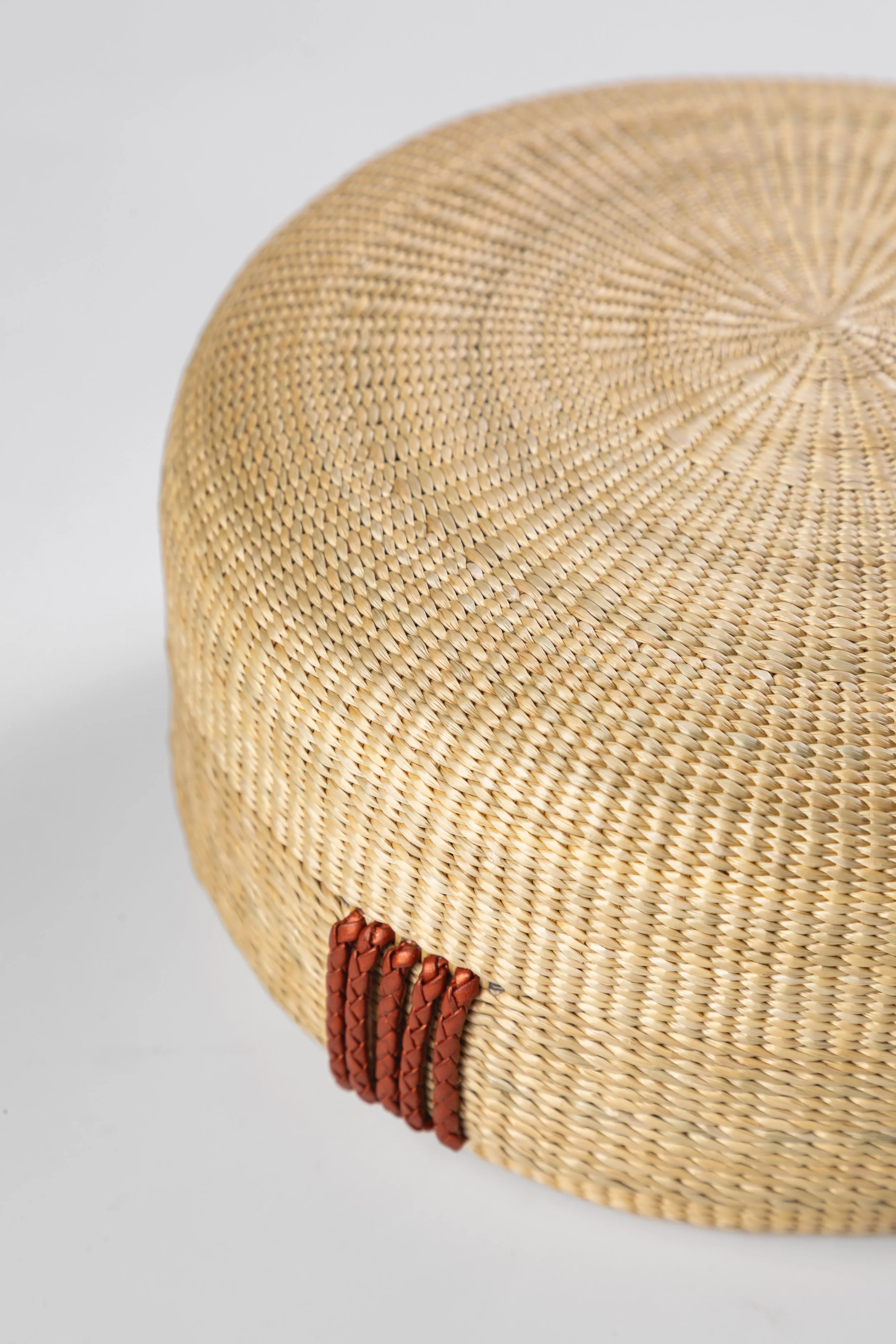
Wancho is the Korean name for an annual sedge plant that reaches up to about two metres in height. Though similar plants grow elsewhere, Korea developed wancho weaving into a refined craft over many centuries.
Wancho was already cultivated and woven during the Three Kingdoms period, which began in the first century BCE. Through the Goryeo and Joseon dynasties, it became a favoured material among the upper classes for everyday household goods such as mats and baskets, and woven wancho pieces were also valued as goods for trade with other countries. As demand grew, so did the cultivation of the plant.
Today, wancho remains as suited to daily life as it was then. Woven wancho is durable as well as beautiful, making it a natural material for objects meant to be used every day. Its texture, known in Korean as gyeol, has a fine, natural sheen that deepens with use.
